Starting your credit journey can feel confusing, especially if you’ve never owned a credit card before. With dozens of options available, it’s easy to wonder which card is actually worth applying for. The good news is that many U.S. credit card issuers offer beginner-friendly cards with no annual fee, simple approval requirements, and valuable rewards. Whether you’re a college student, a young professional, or someone building credit for the first time, choosing the right starter credit card can help you establish a strong credit history and improve your credit score over time.
The best beginner credit cards offer easy account management, fraud protection, and cashback on everyday purchases without overwhelming fees. In this guide, we’ll cover what makes a great first credit card, highlight some of the best options available, and share practical tips to help you use your card responsibly while building excellent credit.
Why Your First Credit Card Matters
Your first credit card is more than just a payment method—it’s the foundation of your financial future. Every on-time payment and responsible purchase helps build your credit history. A strong credit score can make it easier to qualify for car loans, mortgages, apartment rentals, and even lower insurance rates in the future.
Using your first credit card wisely also teaches healthy financial habits, including budgeting, paying bills on time, and keeping balances low.
What to Look for in a Beginner Credit Card
Not every credit card is designed for first-time users. Before applying, consider these important features:
- No annual fee to avoid unnecessary costs.
- Easy approval for applicants with limited or no credit history.
- Cashback or rewards on everyday spending.
- Free credit score tracking.
- Mobile banking and account alerts.
- Fraud protection and zero liability for unauthorized purchases.
- Reasonable credit limit with the opportunity for future increases.
A beginner-friendly card should be simple to manage while helping you build positive credit habits.
Best Credit Cards for Beginners in the USA
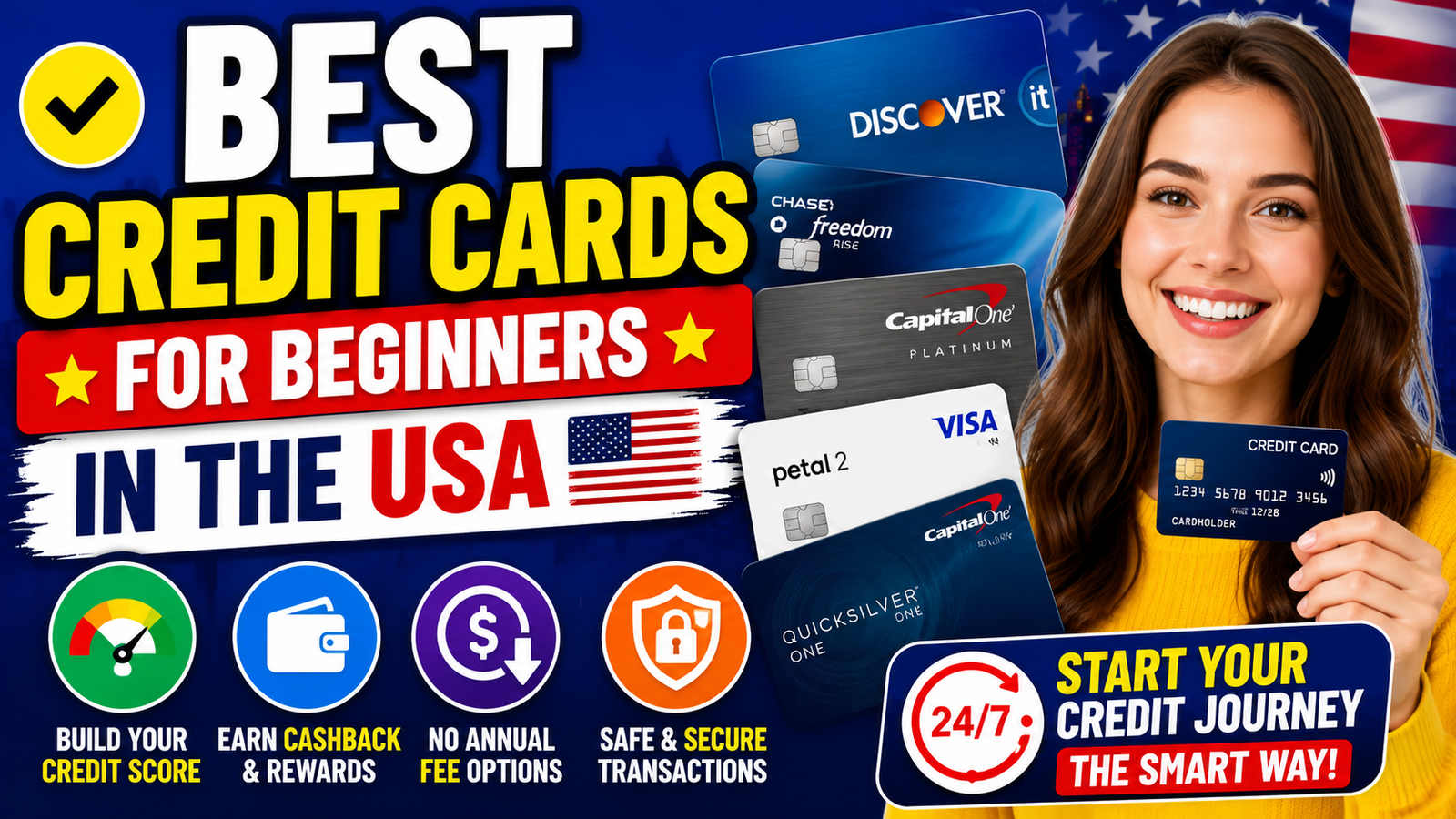
1. Discover it® Student Cash Back
This card is one of the most popular choices for students. It offers rotating cashback categories, no annual fee, and rewards for responsible account management. Discover also provides free FICO® credit score access and excellent customer service.
2. Capital One Platinum Credit Card
Ideal for people with limited credit history, this card focuses on helping users build credit instead of earning rewards. There is no annual fee, and responsible use may qualify you for a higher credit limit over time.
3. Chase Freedom Rise®
Designed specifically for first-time cardholders, this card offers cashback on purchases and can be easier to qualify for if you have a Chase checking account. It also includes fraud monitoring and digital wallet compatibility.
4. Petal® 2 Visa Credit Card
Petal considers more than just your credit score during the application process, making it a strong option for people with little or no credit history. It offers cashback rewards and no annual fee.
5. Capital One QuicksilverOne Cash Rewards
If you have fair credit, this card provides unlimited cashback on every purchase. While some versions may include an annual fee, it can still be a good stepping stone toward stronger credit.
Benefits of Using a Beginner Credit Card
Using your first credit card responsibly comes with several long-term advantages.
- Builds your credit history.
- Improves your credit score over time.
- Earns cashback or purchase rewards.
- Provides better fraud protection than cash.
- Helps qualify for future loans and premium credit cards.
- Offers convenient online and mobile account management.
- Can improve your chances of receiving higher credit limits later.
Responsible card usage today can create financial opportunities for years to come.
Tips to Build Good Credit Quickly
Building good credit doesn’t happen overnight, but consistent habits make a big difference.
Always pay your bill before the due date, even if you only owe a small amount. Try to keep your credit utilization below 30% of your available credit limit. Avoid applying for multiple credit cards within a short period since frequent applications can temporarily lower your credit score. Review your monthly statements carefully and report any suspicious transactions immediately. Setting up automatic payments can also help you avoid late fees and missed payments.
Common Mistakes First-Time Cardholders Should Avoid
Many beginners damage their credit without realizing it. Here are some common mistakes to avoid:
- Missing payment due dates.
- Maxing out your credit limit.
- Paying only the minimum amount every month.
- Applying for several cards at once.
- Ignoring your monthly statements.
- Using your credit card for purchases you can’t afford.
Avoiding these habits will help maintain a healthy credit profile.
How to Choose the Right Starter Credit Card
The best credit card depends on your financial situation. Students may benefit from student-specific cards with cashback rewards, while someone with limited credit history may qualify more easily for a basic unsecured or secured credit card. Compare annual fees, rewards, interest rates, approval requirements, and additional benefits before submitting your application. Reading the card’s terms carefully can help you avoid unexpected charges and choose a card that matches your spending habits.
Final Thoughts
Choosing the best beginner credit card is one of the smartest financial decisions you can make. A good starter card helps you establish credit, learn responsible money management, and unlock better financial opportunities in the future. Focus on cards with no annual fee, straightforward rewards, and features that support credit building. Most importantly, use your card responsibly by paying your balance on time and keeping your spending under control. With consistent habits, your first credit card can become the foundation of a strong credit score and long-term financial success.